
01 — Research
RL-based control, held to a control-theoretic standard
My research aims at developing robust robotic autonomy at the intersection of reinforcement learning (RL) and control theory. Three threads run through it, and each one is a paper you can read below.
01
Stability that follows from convergence
Certifying a highly nonlinear system usually means synthesising a certificate by hand, on a control-affine model most robots never actually admit. Learning the contraction metric and the policy together turns that certification problem into a convergence problem instead.
02
Constraints that survive the task change
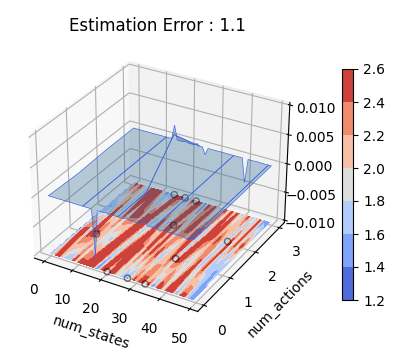
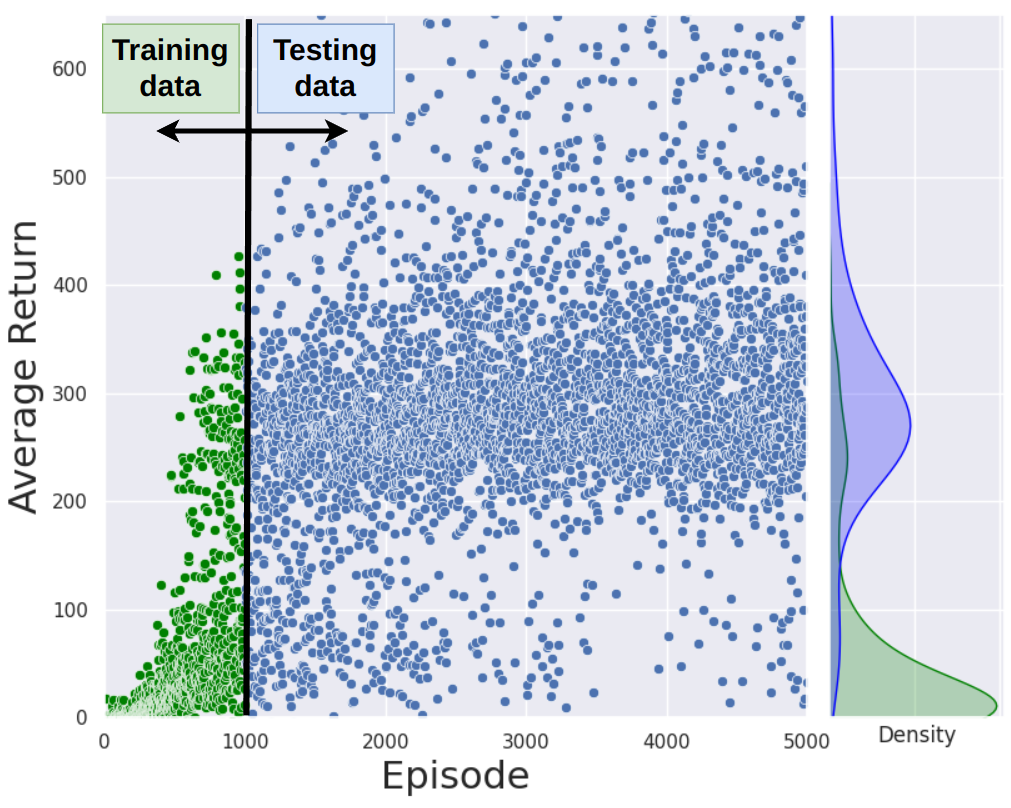
A cost bound that only holds on the training distribution is not much of a bound. I work on adapting constrained policies to unseen tasks, and on reading the gaps in offline data as a reason to be more conservative rather than less.
03
Structure for long horizons
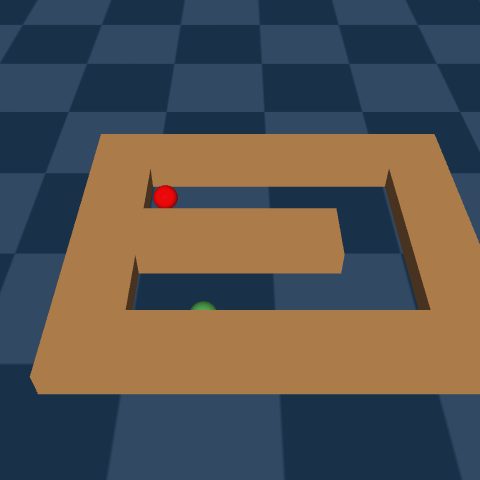
Sparse rewards and long task horizons break flat policies. Discovering macro-actions automatically — and shaping an intrinsic signal where the extrinsic one is silent — keeps credit assignment tractable as the horizon grows.
02 — In motion
What the policies actually do
Recorded from the experiments in the papers. Clips load only when you ask for them — tap one to play.
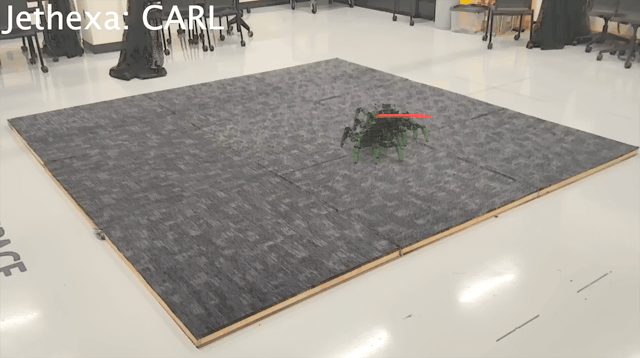
Contraction-Aware RL
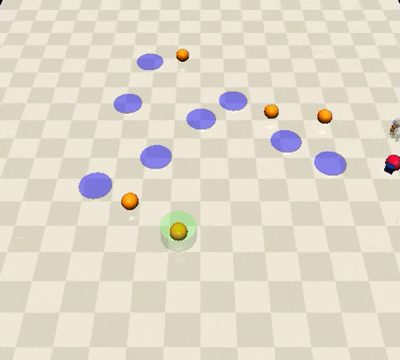
Perturbed rollouts pulled back onto the reference trajectory by a jointly learned contraction metric.
IEEE Transactions on RoboticsHiMeta
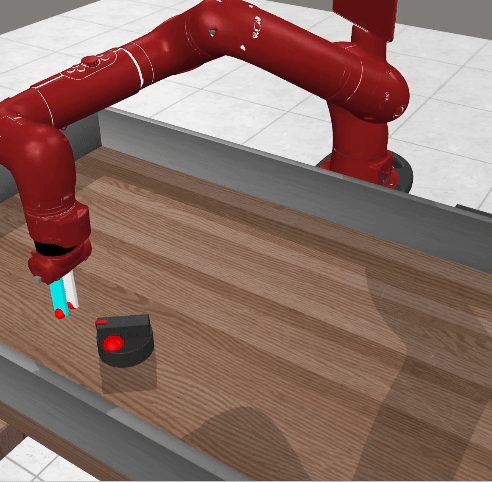
Macro-actions discovered without supervision, then reused by a hierarchy on unseen manipulation tasks.
Scientific ReportsMeta-CPO
Constraint satisfaction carried into a task the agent was never trained on, with only a few adaptation steps.
AAAI 202403 — Selected work
Papers
Filter by topic, or open a paper for the full write-up, figures, and citation.
04 — Background
Where I've been

Ph.D. Student
University of Illinois Urbana-Champaign — Aerospace Engineering (Control and Dynamical Systems)

B.S., Mechanical Engineering
Mississippi State University — Minor in Applied Mathematics
05 — Recent
News
Get in touch
Let’s talk.
Happy to hear from anyone working on RL-based control — or with a question about one of the papers above.